


AUTOMOTIVE APPLICATIONS
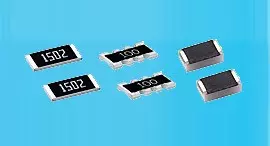
Thin film Precision resistor 0.01%, TC2ppm, wirebondale, Anti-Crossive, MELF. Current sensing, Metal...
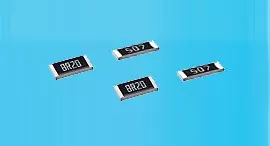
Read MoreViking TCFD Introduction. Viking Tech has the experience in the design of innovative components, offering support and service to Global customers that demand a genuine manufacturing partner. Our goal is to be the leader in design, manufacturing, and marketing of miniature, precision passive components used throughout Automotive, Industrial and 3C electronic applications.. Viking was built in 1997 as a leader thin film precision resistor, thick film , multilayer capacitor and inductors manufacturer. Expert of manufacturing ultra-precision resistors, tolerance down to 0.01% and TCR 2 ppm in a broad range of all package sizes. With advanced thin film technologies and competitive costs, Thin film precision resistor, MELF Resistor, wirebondale, Anti-Crossive, Thin film Array, Also Multi-functions for thick film general purpose resistor and Array , Current sensing, Anti-Sulfur, Anti-Surge, High Power, High Voltage, Metal ultra low ohm design. Completed size from 01005 to 2512. TO220/247 package upto 100W We are also capable of Thin Film, Multilayer, RF and Power Inductors, which are suitable for various wireless or communication applications, the tolerance is able to down to 0.5%, and 13GHz onwards of SRF. Certified with TS16949/ ISO9001/ ISO14001 high standard quality assurance system and meet AEC-Q200 to support automotive grade products
In response to the growing impacts of climate change, Viking closely monitors climate-related risks and opportunities. To proactively respond to evolving government policies and regulatory developments, the Company has incorporated climate-related risks into its enterprise risk management framework with reference to the recommendations of the Task Force on Climate-related Financial Disclosures (TCFD).Climate-related issues are identified and assessed across the four categories of transition risks—Policy and Legal, Technology, Market, and Reputation—to support the development of appropriate adaptation and mitigation measures, with the aim of minimizing potential impacts on the Company's operations and financial performance.
With reference to the International Energy Agency (IEA) Energy Technology Perspectives scenario for limiting global warming to below 2°C, Viking identified four material climate-related risks and three material climate-related opportunities. The following table outlines the potential impacts and financial implications of each identified risk, as well as the corresponding response measures and actions adopted to address climate-related risks and capture related opportunities.
| No. | Type of risk | Major climate risks | Potential financial impact | Response strategy | Corresponding chapters | ||
|---|---|---|---|---|---|---|---|
| Short-term | Mid-term | Long-term | |||||
| 1 | Transformation risks | ● Policy changes lead to increased operating costs | Existing high-carbon assets are replaced or scrapped ahead of schedule to comply with regulations, increasing the capital expenditure for carbon reduction measures, which results in increased operating costs. | Align with regulatory requirements to complete carbon inventory checks and implement energy-saving systems and measures. | Introduce water-saving and process water recycling technologies, and continuously implement energy-saving policies. | Improve energy efficiency and invest in green energy equipment. | 1.3 Financial performance 3.4 Energy management |
| 2 | Transformation risks | ● Responding to the impact of policy changes on enterprise development | Carbon emissions lead to increased environmental taxes and fees, and increasing operating costs that negatively impact business development. | Follow the government's roadmap for sustainable development of TWSE/TPEx listed companies, and improve greenhouse gas inventory procedures. | Implement greenhouse gas reduction actions. | Enhance green R&D and innovation | 3.4 Energy management |
| 3 | Transformation risks | ● Long transformation process results in the loss of market share | The success rate of R&D for new/alternative technologies that comply with the new law and the time to market for new products is not as expected, leading to a decline in customer loyalty and a negative impact on market share. | The product is 100% complying with international regulations on hazardous substances. | Focus on and respond to climate-related issues, enhance corporate image, and increase customer recognition. | Enhance corporate green image through transparency disclosure | 2.1 Product and technology innovation |
| 4 | Transformation risks | ● Expensive technology transformation | The cost of developing new technologies is too high, leading to financial pressure or shortfalls and creating a vicious cycle of funding shortages and the inability of successfully developing technologies. | Enhance corporate governance and establish a climate change response plan. | Continue to invest research and development resources in developing low-carbon products that conform to the circular economy. | Encourage suppliers to take action on climate change management. | 1.3 Financial performance |
Note: Referring to the “Representative Concentration Pathways” (RCPs) of the Fifth Scientific Report (AR5) of the Intergovernmental Panel on Climate Change (IPCC), RCP2.6 is a low-emission scenario that limits the global warming amplitude to within 2°C (compared to pre-industrial levels), which is also known as the 2°C scenario.
| No. | Type of risk | Major climate risks | Potential financial impact | Response strategy | Corresponding chapters | ||
|---|---|---|---|---|---|---|---|
| Short-term | Mid-term | Long-term | |||||
| 1 | Energy | ● Adopt energy management strategies and use green energy. | Reducing the demand for petrochemical energy leads to lower carbon emission costs, while increasing the environmental benefits and profitability of products. | Track energy usage and monitor greenhouse gas emissions from the factory area. | Implement greenhouse gas reduction action and improve energy efficiency. | Use green renewable energy. | 3.4 Energy management |
| 2 | Market | ● Revenue increased as a result of market recognition | Comply with policies and customer requirements for environmentally friendly products, expand market presence, and increase revenue. | The product is 100% complying with international regulations on hazardous substances. | Enhance corporate governance and form a corporate culture that values the importance of and takes action on climate-related issues. | Improve sustainability ratings, build a positive image, and increase market recognition. | 2.2 Marketing and service 2.3 Quality management |
| 3 | Product & service | ● New environmentally beneficial products are launched. | Develop environmentally friendly products, enhance a company's green image and stakeholder recognition, attract funding, and contribute to sustainable operation. | Invest R&D resources to develop environmentally friendly raw materials. | Participate in supplier evaluation that is carried out by procurement units to promote sustainable supply chain management. | Enhance green R&D and innovation | 1.2 Supply chain management 1.3 Financial performance 2.1 Product and technology innovation |
Thin film Precision resistor 0.01%, TC2ppm, wirebondale, Anti-Crossive, MELF. Current sensing, Metal...
Read More
Ceramic high frequency chip inductors, small size to 01005. Thin film, multilayer, wirewound , ferrite...
Read More
Multilayer Ceramic capacitor offers high Voltage, high frequency, low noise, High Q, Low TCR. NPO, X7R,...
Read More